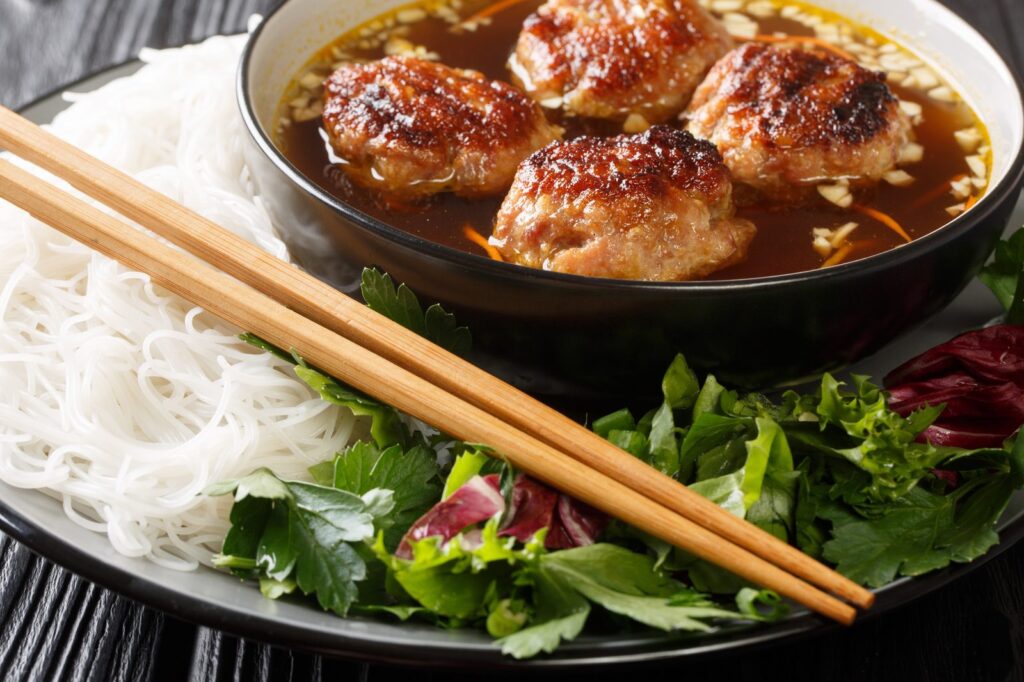
Direct answer: This bun cha recipe recreates Hanoi’s iconic lunch at home: caramelized charcoal-grilled pork patties and sliced pork belly served in a warm, sweet-sour nuoc cham with pickled green papaya, cold rice vermicelli, and a mountain of fresh herbs. The non-negotiables are the two porks, real charcoal smoke (or a good alternative), and a northern-style dipping broth balanced with vinegar, not lime.
Bun Cha Recipe — Hanoi Charcoal-Grilled Pork with Vermicelli
- Prep: 40 minutes (+ 2 hours to overnight marinating)
- Cook: 30 minutes
- Total: about 3 hours including marinating
- Servings: 4–6
- Difficulty: Medium — the grill needs attention, the rest is assembly
- Cuisine: Vietnamese (Hanoi, northern style)
In this guide
- What makes this bun cha recipe authentically Hanoi
- Bun cha recipe ingredients
- How to make bun cha, step by step
- No charcoal grill? 3 ways to cook bun cha at home
- 5 mistakes that ruin homemade bun cha (and how to fix them)
- What to serve with bun cha
- Learn this bun cha recipe in a Hanoi cooking class
- Bun cha recipe FAQs
Craving the real thing? Bun cha is the most-taught dish in our Hanoi cooking classes — grill it over real charcoal with a chef, then eat what you made. Message us on WhatsApp or email us and we’ll match you with a class.
What makes this bun cha recipe authentically Hanoi
Direct answer: An authentic Hanoi bun cha recipe has four signatures: two porks (patties called chả viên plus sliced belly called chả miếng), real charcoal smoke, a northern-style dipping broth made with vinegar rather than lime, and pickled green papaya floating in the bowl. It is a lunch dish — in Hanoi, vendors grill through midday and close by afternoon.
The classic Hanoi marinade is deliberately simple: fish sauce, sugar, minced shallots, garlic, and black pepper. No lemongrass, no five-spice — those belong to other regions’ grilled pork. The simplicity is the point: sugar caramelizes over charcoal, shallots perfume the fat, and fish sauce brings the savory depth. Every addition beyond these five moves the dish away from the Hanoi original.
The dipping broth is where home cooks most often go wrong. Northern-style bun cha broth is warm, slightly sweet, and built on rice vinegar — not lime juice, which is a southern nuoc cham habit. The pork and pickles go into the broth; the cold vermicelli gets dipped, never mixed. When Barack Obama and Anthony Bourdain ate at Bun Cha Huong Lien in 2016, this was the bowl they had — and National Geographic has named bun cha one of the world’s top 10 street dishes (VnExpress).
If you want the full story of where to eat it in the city, see our Bun Cha Hanoi guide: best spots and 2026 prices.
Bun cha recipe ingredients
Direct answer: This bun cha recipe serves 4–6 and needs two pork cuts (belly for slices, fatty shoulder for patties), a 5-ingredient marinade, a 5-ingredient dipping broth, green papaya or carrot pickles, rice vermicelli, and a big plate of northern herbs. Fatty pork is essential — lean meat dries out on the grill.
| Component | Ingredient | Amount | Notes |
|---|---|---|---|
| Pork patties (chả viên) | Ground pork shoulder | 500 g | Choose a fatty grind (about 20% fat) — lean pork shrinks and dries |
| Shallots, finely minced | 2–3 | Shallots, not onion — sweeter and more aromatic | |
| Garlic, minced | 3 cloves | ||
| Fish sauce | 2 tbsp | Good-quality fish sauce shows in the final flavor | |
| Sugar | 1½ tbsp | Drives caramelization and char | |
| Black pepper | ½ tsp | ||
| Pork belly (chả miếng) | Pork belly, sliced 3–4 mm | 500 g | Score the fat cap lightly so slices don’t curl on the grill |
| Shallots, finely minced | 2 | ||
| Fish sauce | 2 tbsp | ||
| Sugar | 1½ tbsp | ||
| Vietnamese caramel sauce (nước màu) | 1 tbsp | Optional but traditional — deepens color and char | |
| Dipping broth | Fish sauce | 3 tbsp | |
| Sugar | 2 tbsp | Hanoi broth leans slightly sweet | |
| Rice vinegar | 2 tbsp | Northern style — not lime juice | |
| Warm water | 250 ml | ||
| Garlic + bird’s eye chili, thinly sliced | 2 cloves + 1–2 chilies | Added to individual bowls, not cooked in | |
| Pickles (dưa góp) | Green papaya, julienned | ¼ papaya | Traditional; kohlrabi or carrot alone also works |
| Carrot, julienned | 1 | ||
| Sugar + rice vinegar | 2 tbsp each | Quick-pickle while the pork marinates | |
| To serve | Rice vermicelli (bún) | 400 g fresh / 200 g dry | Cooked, rinsed cold, served at room temperature |
| Herbs | Large mixed plate | Perilla, lettuce, Thai basil, Vietnamese balm, cilantro — plus fish mint (diếp cá) if you can find it; it’s Hanoi’s signature herb for this dish |
How to make bun cha, step by step
Direct answer: To make bun cha: marinate the two porks 2 hours to overnight, quick-pickle the papaya, warm the dipping broth, grill the pork over charcoal until charred at the edges, cook and cool the vermicelli, then assemble — pork and pickles into warm broth bowls, noodles and herbs on the side for dipping. Active work is about 70 minutes.
- Mix the marinade. Divide the shallots, garlic, fish sauce, sugar, and pepper between two bowls. Put the ground pork in one, the sliced belly in the other (add the caramel sauce to the belly bowl if using). Mix thoroughly so every piece is coated.
- Marinate 2 hours to overnight. Cover and refrigerate. At least 2 hours is the minimum; overnight gives noticeably deeper flavor and better char. Don’t skip this — unmarinated pork grills up bland.
- Quick-pickle the vegetables. Toss the julienned papaya and carrot with sugar and vinegar plus a pinch of salt. Let them sit while the pork marinates — at least 30 minutes.
- Make the dipping broth. Warm the water, dissolve the sugar, then stir in fish sauce and vinegar. Taste: it should be clearly sweet-sour-salty with no single note dominating. Keep it warm (not boiling) — in winter Hanoi, the broth is served warmer; in summer, just warm.
- Shape and grill. Form the ground pork into flat patties about 5–6 cm wide. Grill over medium-high charcoal, turning every 30 seconds, until charred at the edges and cooked through — about 6–10 minutes. Grill the belly slices the same way. Rest 2 minutes.
- Cook the noodles. Boil the vermicelli per package directions, drain, and rinse under cold water until completely cool. Divide among serving plates.
- Assemble and eat. Put grilled pork and a spoonful of pickles into each bowl of warm broth; add sliced garlic and chili to taste. Set out the noodles and herb plate alongside. Eat by dipping a bundle of noodles into the broth, adding pork and herbs, and eating it all together — the warm-smoky against cool-fresh contrast is the whole point.
No charcoal grill? 3 ways to cook bun cha at home
Direct answer: No charcoal? You can still make a very good bun cha recipe with an oven broiler (5–8 minutes per side), a cast-iron grill pan on high heat, or an air fryer at 200°C for 10–12 minutes, shaking once. Charcoal smoke is ideal, but a hard char and caramelized marinade carry most of the flavor.
| Method | How | Result |
|---|---|---|
| Charcoal grill (best) | Medium-high heat, turn every 30 seconds, 6–10 minutes | Real smoke, best char — the Hanoi original |
| Oven broiler | Highest setting, foil-lined tray, 5–8 minutes per side | Excellent char; closest to charcoal without smoke |
| Cast-iron grill pan | Ripping hot, in batches, don’t crowd the pan | Good sear and grill marks; work in small batches |
| Air fryer | 200°C (400°F), 10–12 minutes, shake or flip once | Surprisingly good caramelization; easiest cleanup |
Whichever method you use, keep the fat: pork belly slices render and self-baste, and the sugar in the marinade needs high heat to caramelize rather than steam. If your patties are steaming instead of searing, your heat is too low or your pan too crowded.
5 mistakes that ruin homemade bun cha (and how to fix them)
Direct answer: The five classic homemade bun cha failures are lean pork (dry patties), lime in the broth (wrong region’s flavor), a cold or unbalanced broth, skipping the marinating time, and serving hot noodles. Fix them with fatty pork, rice vinegar, a warm sweet-sour-salty broth, an overnight marinade, and cold rinsed vermicelli.
| Mistake | Why it happens | Fix |
|---|---|---|
| Dry, crumbly patties | Lean ground pork | Use shoulder with ~20% fat; mix until slightly tacky so patties hold |
| Broth tastes “off” | Lime juice instead of vinegar | Northern bun cha broth uses rice vinegar — lime is a southern habit |
| Flat, one-note broth | Wrong ratio or served cold | Balance sweet-sour-salty with no dominant note; serve warm |
| Bland meat | Marinated under an hour | Minimum 2 hours, ideally overnight in the fridge |
| Mushy, clumpy noodles | Served hot or not rinsed | Rinse boiled vermicelli under cold water; serve at room temperature |
What to serve with bun cha
Direct answer: Serve bun cha with a side of nem rán (crispy fried spring rolls — the classic companion, about 7,000 VND per roll at Hanoi street stalls), the full herb plate, and iced tea. For dessert, Hanoi’s famous egg coffee is the traditional follow-up — rich, sweet, and a perfect end to the meal.
Don’t overthink the sides: bun cha is a complete bowl. The nem rán add crunch, the herbs add freshness, and that’s genuinely all it needs. If you’re cooking the full Hanoi lunch spread, our authentic Hanoi pho bo recipe makes a great next project — a different technique (long-simmered broth) with the same northern discipline.
Learn this bun cha recipe in a Hanoi cooking class
Direct answer: Bun cha is the most-taught dish in Hanoi cooking classes — nearly every school we list includes it, and it’s the easiest of Hanoi’s great dishes to genuinely recreate at home. Expect to pay $32–60 per person (price snapshot from our October 2026 provider research), usually including a market tour, the hands-on session, and the meal you cook.
A recipe gets you the technique; a class gets you the judgment — how the charcoal should smell, exactly when the broth’s sweet-sour balance is right, how a chef shapes a patty that survives the grill. You’ll also pick up the market skills: choosing fatty pork shoulder by sight and julienning green papaya without a mandoline.
Grill it with a chef first, then cook it at home forever. Tell us your dates and we’ll match you with a Hanoi class that teaches bun cha. Message us on WhatsApp or email us.
Key takeaway: Great bun cha comes down to five decisions: fatty pork, the 5-ingredient Hanoi marinade, an overnight rest, a hard char, and a warm vinegar-based broth. Get those right and the dish is forgiving everywhere else.
Ready to grill Hanoi’s best lunch at home?
This bun cha recipe gives you the authentic Hanoi version — two porks, charcoal smoke, and a properly balanced northern broth — with realistic alternatives when you don’t own a grill. Make it once by the book; after that, you’ll adjust the broth by taste like a Hanoian. And if you want to learn it standing next to a chef over real charcoal first, that’s exactly what our Hanoi cooking classes or email us are for.
Bun cha recipe FAQs
Can I make this bun cha recipe without a charcoal grill?
Yes. An oven broiler on its highest setting (5–8 minutes per side) gives the closest result to charcoal. A cast-iron grill pan or an air fryer at 200°C also works well — the caramelized marinade and hard char carry most of the flavor even without smoke.
What pork is best for bun cha?
Two cuts: pork belly sliced 3–4 mm thick for chả miếng, and fatty ground pork shoulder (about 20% fat) for the chả viên patties. Lean pork is the most common cause of dry homemade bun cha — fat is essential.
How long should I marinate the pork for bun cha?
Minimum 2 hours in the refrigerator; overnight is ideal and gives noticeably deeper flavor and better char. Don’t marinate at room temperature — the pork sits out too long for food safety.
Should bun cha broth be hot or warm?
Warm, not hot. In Hanoi it’s served warm in summer and warmer in winter, but never boiling — boiling heat dulls the fresh vinegar tang and wilts the pickles. Warm the water to dissolve the sugar, then let it cool to warm before serving.
Why is bun cha a lunch dish in Hanoi?
It’s a deep Hanoi tradition: vendors fire up the charcoal grills late morning, the smoke drifts down the street around noon, and most stalls sell out and close by mid-afternoon. Plan for 11:00–13:30; dinner bun cha is the classic tourist mistake. (More in our Bun Cha Hanoi guide.)
Can I prepare bun cha ahead of time?
Partially. Marinate the pork the night before, quick-pickle the vegetables, and mix the dry broth base — then grill, warm the broth, and cook the noodles just before eating. Grilled pork reheats poorly, so always grill fresh.
Sources: VnExpress International’s Hanoi bun cha recipe (2023) for technique and serving facts; our Bun Cha Hanoi guide for 2026 street prices; October 2026 provider research for class price ranges.