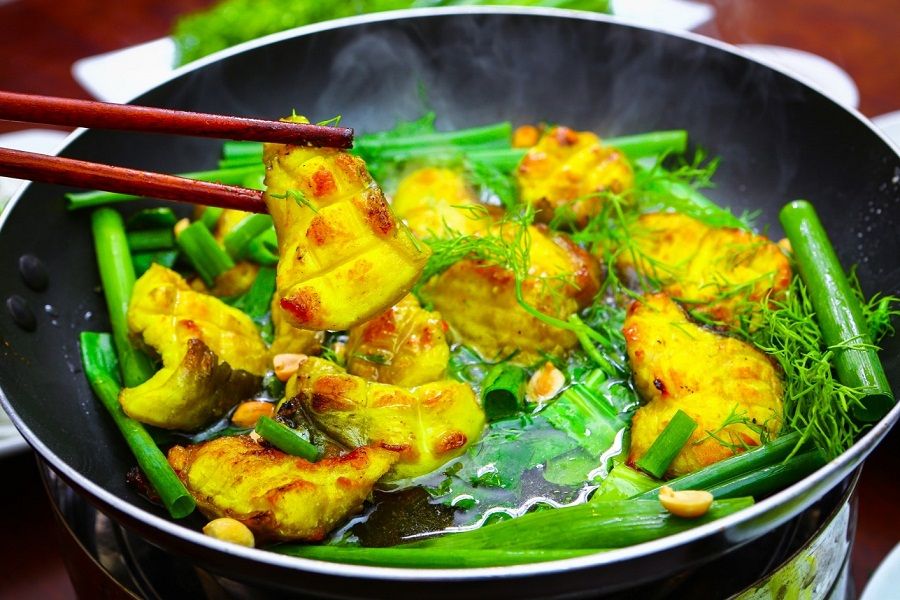
Direct answer: This cha ca recipe shows you how to make Hanoi’s most legendary turmeric fish at home: firm white fish marinated in turmeric and galangal, seared golden in a hot pan, then sizzled with heaps of dill and spring onion. Serve it with rice vermicelli, crushed peanuts, fresh herbs, and mam tom (fermented shrimp-paste sauce). Active time is about 45 minutes plus at least 1 hour of hands-off marinating, and it feeds 4.
Learn cha ca from a Hanoi chef, not just a recipe page. Join a market tour + hands-on class and cook it the traditional way.
Chat on WhatsApp → or email us
In this guide
- What is cha ca? Hanoi’s one-dish legend
- Cha ca recipe: ingredients you’ll need
- Which fish should you use?
- Step-by-step: how to make cha ca la vong
- The mam tom sauce: love it or swap it
- How to eat cha ca like a Hanoian
- Common mistakes and how to fix them
- Want the real thing in Hanoi?
- Frequently asked questions
Cha Ca La Vong at a glance
| Dish | Turmeric-marinated fish sizzled with dill & spring onion |
| Prep | 30 minutes |
| Marinate | 1 hour (or overnight) |
| Cook | 15–20 minutes |
| Serves | 4 |
| Difficulty | Easy–medium |
| Origin | 14 Cha Ca Street, Hanoi — since 1871 |
What Is Cha Ca? Hanoi’s One-Dish Legend
Direct answer: Cha ca la vong is Hanoi’s signature fish dish: turmeric-marinated catfish sizzled tableside on a charcoal burner with mountains of dill and spring onion, then eaten with vermicelli, peanuts, herbs, and pungent shrimp paste. It was created by the Doan family at 14 Cha Ca Street (originally Hang Son Street) in 1871, and CNN named it a must-try dish of Vietnam in 2019 (per VnExpress International).
What makes cha ca different from any other fried fish is the ritual. The fish never arrives plated and finished. It arrives half-cooked in a pan over live charcoal, and your server tosses it with huge handfuls of fresh dill until the whole table smells of turmeric and herbs. You build every bite yourself — a bowl of vermicelli, fish, wilted dill, peanuts, a drizzle of mam tom — and eat while it still crackles. Dill is the giveaway that this is northern cooking: it is a Hanoi herb, rarely used this way anywhere else in Vietnam.
Our team covers the full Hanoi story — where to eat it, what a portion costs in 2026 — in our Cha Ca La Vong Hanoi guide. This page is the companion you need after that: the actual cha ca recipe, written so you can recreate the dish faithfully in a home kitchen.
Cha Ca Recipe: Ingredients You’ll Need
Direct answer: This cha ca recipe needs 1 kg of firm white fish, fresh turmeric and galangal for the marinade, fermented rice (cơm mẻ) or plain yogurt to tenderize, fish sauce and shrimp paste for depth, plus mountains of fresh dill and spring onion, rice vermicelli, peanuts, herbs, and ingredients for mam tom sauce. Everything is available at any Vietnamese wet market or a well-stocked Asian grocery abroad.
For the fish and marinade (serves 4):
- 1 kg firm white fish fillets, cut into 3–4 cm chunks
- 2 tbsp turmeric powder (or 150 g fresh turmeric, juiced — see step 2)
- 150 g fresh galangal, grated and juiced
- 3 tbsp fermented rice (cơm mẻ) or plain unsweetened yogurt
- 2 tbsp fish sauce
- 1 tbsp shrimp paste (mắm tôm)
- 2 tbsp sugar
- 1 tsp ground black pepper
- 4 cloves garlic, minced
- 2 shallots, minced
- 3 tbsp neutral oil
To sizzle with the fish:
- 1 large bunch fresh dill (about 80–100 g), cut into 5 cm pieces
- 1 bunch spring onions, cut into 5 cm batons
- 3 tbsp neutral oil or pork fat
To serve:
- 500 g dried rice vermicelli (bún), cooked and cooled
- 100 g roasted peanuts, roughly crushed
- Fresh herbs: mint, coriander, perilla (tía tô)
- Lime wedges and sliced chili
For the mam tom sauce:
- 3 tbsp shrimp paste (mắm tôm)
- 2 tbsp sugar
- 2 tbsp lime juice (kumquat juice if you can find it)
- 2 tbsp water
- 1 small garlic clove, minced
- 1 red chili, thinly sliced (optional)
💡 Tip: Don’t skip the fermented rice or yogurt — it is the ingredient that tenderizes the fish and carries the turmeric into the flesh. Multiple traditional recipes, including VnExpress International’s Hanoi-style version, treat it as essential. Cooking this cha ca recipe for a crowd? It scales easily — just keep the fish in a single layer per pan.
Which Fish Should You Use?
Direct answer: The Hanoi original uses crystal-eyed catfish (cá lăng) — a firm river fish that holds together in a screaming-hot pan. At home, any firm, meaty white fish works: cod, halibut, sea bass, or snapper. Avoid delicate, flaky fish — they disintegrate when you toss them with the dill.
| Fish | Why it works | Notes |
|---|---|---|
| Crystal-eyed catfish | The traditional choice, firm and sweet | Recommended by VnExpress; find it at Hanoi wet markets |
| Hemibagrus catfish | The Hanoi restaurant classic | What specialist cha ca shops in the Old Quarter use |
| Cod or halibut | Firm, widely available abroad | Best substitute outside Vietnam |
| Sea bass or snapper | Firm flesh, mild flavor | Great option; keeps its shape in the pan |
| Tilapia | Budget-friendly and firm enough | Pat very dry before marinating |
Whatever you choose, buy fillets with no bones, cut them into chunky 3–4 cm pieces, and pat them thoroughly dry with paper towels before marinating — wet fish steams instead of searing.
Step-by-Step: How to Make Cha Ca La Vong
Direct answer: To make cha ca la vong, marinate firm fish chunks in turmeric, galangal, fermented rice, fish sauce, and shrimp paste for at least 1 hour; sear the fish in a hot skillet until golden; then toss in dill and spring onion for 30 seconds until wilted. Serve immediately in the sizzling pan with vermicelli, peanuts, herbs, and mam tom sauce on the side.
- Prep the fish. Clean the fillets, remove any bones, and cut into rectangular 3–4 cm pieces. Cut the dill and spring onions into 5 cm pieces and set aside.
- Make the marinade. Pound or grate the fresh galangal and turmeric, then squeeze out their juice (a squeeze of lime juice helps keep the turmeric’s color bright, per VnExpress). Whisk the juices with the fermented rice or yogurt, fish sauce, shrimp paste, sugar, pepper, garlic, shallots, and oil until smooth. Using powders instead of fresh roots works — mix them straight into the yogurt base.
- Marinate. Toss the fish pieces in the marinade until every surface is coated. Cover and refrigerate for at least 1 hour; overnight is even better. (If you are short on time, 30 minutes still works, but the turmeric won’t penetrate as deeply.)
- Mix the mam tom sauce. Whisk the shrimp paste, sugar, lime juice, and water until smooth, then stir in the garlic and chili. Set aside — you’ll add a spoonful of sizzling hot oil from the pan to it at the table.
- Cook the vermicelli. Boil per package directions, drain, rinse under cold water, and drain again very well — wet noodles dilute your sauce.
- Sear the fish. Heat a large cast-iron skillet over medium-high heat with 2–3 tbsp oil. Sear the fish pieces 2–3 minutes per side until golden and just cooked through. Work in batches if needed; crowding the pan steams the fish.
- Sizzle the herbs. Push the fish to the sides, add the remaining oil, and toss in the dill and spring onions. Stir gently for about 30 seconds until wilted and fragrant. This is the moment the dish comes alive — the smell is unmistakable.
- Serve in the pan. Reduce the heat to low and bring the whole skillet to the table (a portable burner keeps it sizzling, restaurant-style). Set out the vermicelli, peanuts, herbs, lime, and mam tom sauce, and let everyone build their own bowls.
That is the complete cha ca recipe, end to end — and the whole cook takes under 20 minutes once the fish has marinated. The next two sections cover the two things that make or break the dish at home: the sauce and the serving ritual.
The Mam Tom Sauce: Love It or Swap It
Direct answer: Mam tom — fermented shrimp paste whisked with sugar, lime juice, and water until foamy — is the traditional cha ca dipping sauce, and its pungent funk is the dish’s signature kick. Stir in a spoonful of the hot oil from the fish pan right before eating to bloom its aroma. If the smell is too much, swap it for nuoc cham (fish sauce, lime, sugar, water, garlic, chili).
The authentic mixing order, used across Hanoi recipes: whisk 3 tbsp shrimp paste with 2 tbsp sugar, 2 tbsp lime juice, and 2 tbsp water until you see small bubbles. Add minced garlic and sliced chili to taste. At the table, dribble in a spoon of the sizzling oil from the cha ca pan and stir — the heat tames the rawness and turns the sauce aromatic.
First-timers cooking this cha ca recipe often do better with the backup: nuoc cham — 3 tbsp fish sauce, 3 tbsp lime juice, 3 tbsp water, 1½ tbsp sugar, garlic, chili. It’s sweeter, cleaner, and still very Hanoi. Our advice: put both on the table and let people choose.
How to Eat Cha Ca Like a Hanoian
Direct answer: Once you’ve cooked this cha ca recipe, start with a small bowl of rice vermicelli, pile on a few pieces of sizzling fish and some of the wilted dill and spring onion, scatter peanuts and fresh herbs, then drizzle over mam tom sauce and mix. Eat one small bowl, then build another — cha ca is eaten slowly, one pan per table, usually with cold beer.
The rhythm matters more than the order. Don’t dump everything into a big bowl at once. The dish is designed for small, hot, repeated bowls: noodles, fish, herbs, peanuts, sauce, mix, eat, repeat. Between bowls, the fish stays warm in the pan over low heat (or the portable burner), so the last bite is as good as the first.
And keep one thing in mind: this is a linger-over-it meal, not fast street food. The restaurants that invented it — including the original at 14 Cha Ca Street — built their entire business around a single pan shared at a single table. Give the dish that same unhurried attention at home.
Common Mistakes and How to Fix Them
Direct answer: The most common mistakes cooks make with this cha ca recipe are using delicate fish that falls apart, adding the dill too early so it burns, and under-draining the vermicelli so the noodles water down the sauce. All three are easy to avoid: pick firm fish, add herbs in the last 30 seconds, and drain the noodles twice.
| Mistake | Why it happens | Fix |
|---|---|---|
| Fish falls apart in the pan | Delicate, flaky fish; too much stirring | Use firm fillets (catfish, cod, sea bass); flip once, toss gently |
| Dill burns and tastes bitter | Herbs added before the fish is done | Add dill and spring onion only in the final 30 seconds |
| Dish tastes flat, turmeric washed out | Fish was wet; marinade didn’t stick | Pat fish very dry; marinate at least 1 hour, preferably overnight |
| Noodles dilute the sauce | Vermicelli drained once | Rinse cold, then drain again until no water pools |
| Mam tom too harsh | Paste straight from the jar | Whisk with sugar + lime + water until foamy; add hot pan oil at the table |
| Yellow stains everywhere | Fresh turmeric on hands and boards | Wear gloves; a squeeze of lime keeps the color in the fish, not on you |
Want the Real Thing in Hanoi?
Direct answer: If you want to taste cha ca where it was invented — and learn it properly from a chef — start with our Cha Ca La Vong Hanoi guide (restaurants, prices, and what to order), then consider the Red Bean cha ca cooking class, one of the only Hanoi classes built around this dish ($52–$90 per person, market tour included).
This cha ca recipe gets you the flavors; a class gets you the technique — how hot the pan should be, how much dill is “enough,” and how Hanoians actually assemble a bowl. If you’re building a full Hanoi food itinerary, pair this cha ca recipe with our other Hanoi classics: the bun cha recipe for the city’s other lunch legend, the crispy nem ran recipe for the perfect starter, and our pho bo recipe for the breakfast classic.
Learn cha ca from a Hanoi chef, not just a recipe page. Join a market tour + hands-on class and cook it the traditional way.
Chat on WhatsApp → or email us
Key takeaway: Cha ca is the one Hanoi dish built around a ritual, not just a flavor — turmeric-marinated fish, a mountain of dill, and a sizzling pan at the table. Marinate long, sear hard, add the herbs last, and eat it slowly in small bowls.
Conclusion
Of all the Hanoi recipes we’ve written — from pho to bun cha to nem ran — cha ca is the one that rewards confidence most. The ingredient list looks long, but the method is simple: marinate, sear, sizzle the herbs, and let the pan do the talking at the table. The exact fish and the exact proportions matter less than the two non-negotiables: plenty of fresh dill, and a pan hot enough to keep everything crackling.
Try this cha ca recipe at home first. Then, when you visit Hanoi, go taste the original and see how close you got — that’s the best kind of food homework.
Frequently Asked Questions
What fish is used in cha ca la vong?
Traditionally, crystal-eyed catfish (cá lăng), a firm river fish — VnExpress International recommends it for authentic Hanoi-style cha ca. Hanoi restaurants also use hemibagrus catfish. At home, cod, halibut, sea bass, snapper, or tilapia all work; just avoid delicate, flaky fish that breaks apart in the pan.
How long should I marinate the fish for this cha ca recipe?
At least 1 hour in the refrigerator; overnight gives the deepest turmeric color and flavor. Traditional recipes range from 30 minutes to 8 hours. If you are in a hurry, 30 minutes still produces a good result, but the fish won’t be as golden or seasoned through.
Is mam tom (shrimp paste) safe to eat?
Yes — mam tom is a fermented, cured product, and Hanoians eat it daily in this exact sauce. Its strong smell mellows once whisked with sugar, lime juice, and hot oil. If you’d rather not try it, nuoc cham (fish sauce–lime dipping sauce) is a perfectly respectable substitute.
Can I make cha ca without a charcoal burner or portable stove?
Yes. A heavy cast-iron skillet holds heat well — sear everything on the stove, then bring the pan to the table and keep it on low heat, returning it to the burner between rounds if needed. The charcoal burner is theater and heat retention, not a flavor requirement.
What’s the difference between cha ca and ordinary fried fish?
Three things: the turmeric–galangal–fermented-rice marinade (not just seasoning), the mountain of dill sizzled tableside (unique to Hanoi), and the build-your-own-bowl ritual with vermicelli, peanuts, and mam tom. Fried fish is a dish; cha ca is a performance you eat.
How much does cha ca cost in Hanoi?
About 120,000–150,000 VND per portion at Cha Ca La Vong, the original restaurant at 14 Cha Ca Street, and around 200,000 VND per person at newer specialist spots (per our Cha Ca La Vong Hanoi guide, 2026). Cooking classes that teach it, like Red Bean, run about $52–$90 per person with a market tour included.