After the pho and the bun cha, save room for dessert. This che Hanoi guide covers Vietnam’s beloved family of sweet dessert soups — coconut milk, mung beans, taro, pandan jelly, lotus seeds, served warm or over crushed ice — is the gentlest possible end to a Hanoi food day. A bowl costs about a dollar from a street cart, yet most tourists walk straight past it. This guide fixes that: what it is, what it costs, how to order it, and where you can learn to cook it.
Direct answer: Chè is Vietnam’s family of sweet dessert soups and puddings, served warm or over ice — think coconut milk, mung beans, taro, pandan jelly, and lotus seeds. In Hanoi a bowl costs 25,000–40,000 VND (~$1–1.50) from street carts and dessert shops. Chef Duyen’s home cooking class includes it on both its countryside and Hanoi menus.
In this guide
- What makes che Hanoi different
- How much does it cost
- Where to eat it in Hanoi
- Learn to cook it in Hanoi
- Frequently asked questions
What makes che Hanoi different
Che Hanoi stands apart from southern versions in its restraint — less sweet, more delicate, built on mung bean, lotus seed, and coconut rather than heavy syrups.
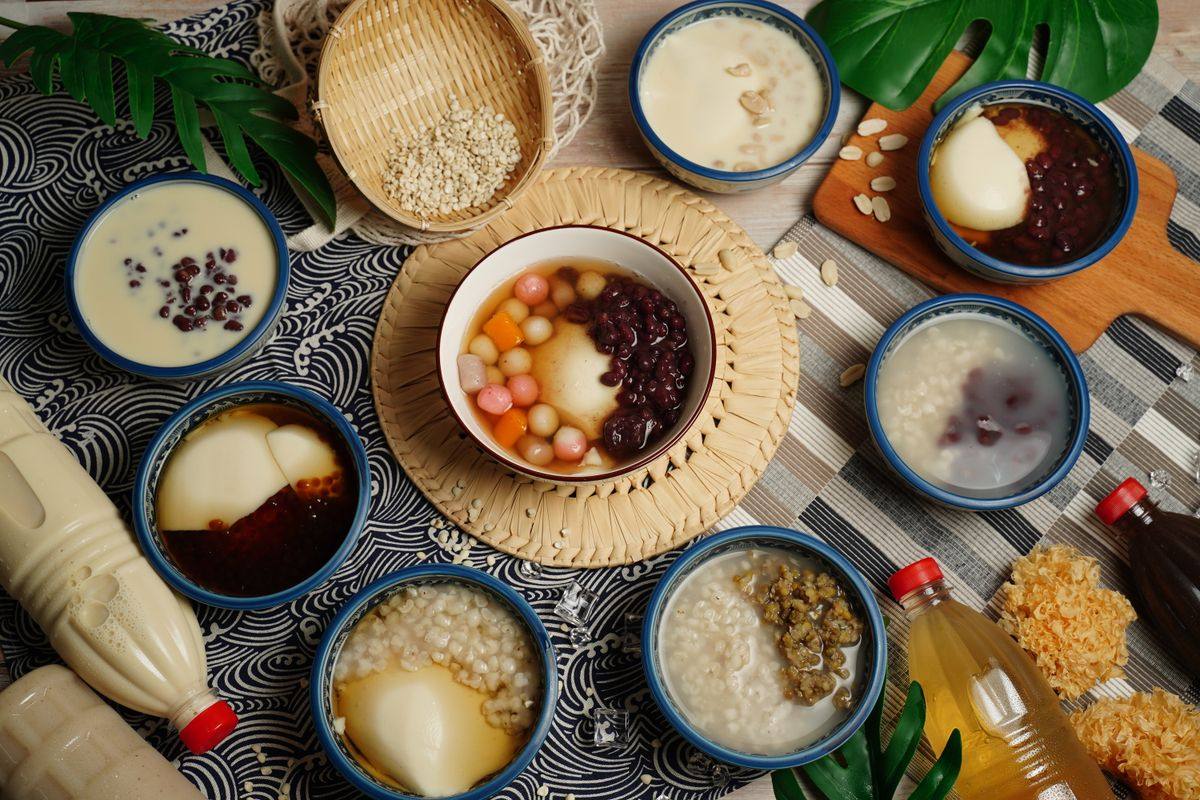
Direct answer: Che Hanoi leans delicate: mung bean, lotus seed, taro, pandan jelly, and coconut milk, never heavy syrups. Favorites include che hạt sen long nhãn (lotus seed in longan syrup), che ba màu (three-color: mung bean, red bean, pandan jelly), and che chuối (banana in coconut milk) — served warm in winter, over crushed ice in summer.
Chè is not one dish but a whole category — hundreds of regional variations across Vietnam, from thick puddings to drinkable sweet soups. The Hanoi style favors restraint: gentle sweetness, clear broths, and seasonal ingredients over the richer, more tropical combinations found further south.
Learn three names and you can order anywhere:
- Chè ba màu (three-color che) — the classic starter: layers of mung bean paste, red bean, and green pandan jelly under coconut milk and ice. Sweet, textural, and photogenic.
- Chè hạt sen long nhãn — lotus seeds simmered in a light longan syrup. Delicate, fragrant, and barely sweet; the connoisseur’s choice.
- Chè chuối — banana simmered in coconut milk with tapioca pearls, often served warm. Comforting on a cool Hanoi evening.
Seasonality matters. Summer is iced season — carts pile crushed ice high. In winter, vendors switch to warm bowls, and a hot bowl eaten on a cold night is one of Hanoi’s quiet great pleasures.
How much does it cost
Direct answer: A bowl of che Hanoi costs 25,000–40,000 VND — typical for che Hanoi street carts (about $1–1.50) at street carts and dessert shops in the Old Quarter, per 2026 street-food price surveys. It is one of the cheapest desserts you can buy in the city — a dessert crawl of three different bowls still costs less than a single café latte back home.
| Where | Price (VND) | Price (USD ~) |
|---|---|---|
| Street cart / sidewalk stall | 25,000–30,000 | $1–1.15 |
| Dessert shop (quán che) | 30,000–40,000 | $1.15–1.50 |
| Old Quarter evening markets | 25,000–40,000 | $1–1.50 |
Prices from 2026 street-food price surveys of Hoan Kiem snack shops; vendors may adjust — the menu board is the final word.
Want to cook it yourself? Chè is the dessert course in Hanoi’s home-style cooking classes. Message us on WhatsApp or email us and we will point you to a class that teaches it.
Che Hanoi: where to eat the best dessert soups
Direct answer: Research lists che Hanoi prices and famous types but no verified standout addresses yet, so we name none rather than invent them. Walk any Old Quarter dessert street in the evening and follow the crowds to the busiest glass cabinets — our address list is and coming soon.
Here is how to find great dessert without an address list. From around 6pm, dessert vendors set up along the busiest Old Quarter walking streets with glass cabinets full of colorful bowls — the busier the crowd of locals, the better. Point at what looks good, or use the three names from the section above: che ba màu, che hạt sen long nhãn, che chuối.
A few practical tips from our team:
- Go where the ice is crushed fresh. Good vendors crush ice to order; pre-crushed ice melting in a tub means a watery bowl.
- Ask for “ít đường” (less sugar) if you prefer it lighter — vendors are happy to adjust.
- Winter changes the menu. Ask for che nóng; the warm lotus-seed and banana versions are the winter specialties.
Learn to cook che in Hanoi
Direct answer: Chef Duyen’s home cooking class is the confirmed place to learn che Hanoi in Hanoi: both its Countryside menu (with caramel pork and banana flower salad) and its Hanoi Favourites menu end with dessert, so you cook a full savory meal and finish with dessert. For other classes, dessert menus are — ask when booking.
Chè rewards technique more than it looks: the lotus seeds must be simmered until tender but intact, the coconut milk balanced so it enriches without overwhelming, and the sweetness calibrated — Vietnamese dessert sweetness is a skill, not a measurement. Learning it in a home kitchen, from a Hanoi cook, is the difference between a recipe and an understanding.
- Chef Duyen’s home cooking class — che (coconut/taro style) closes both the Countryside and Hanoi Favourites menus; $45 direct including market tour, ingredients, and hotel pickup.
Dessert coverage at other Hanoi classes is in our research — if it is the reason you are booking, ask us on WhatsApp or email us and we will confirm the current menu before you pay. Our 10 best cooking classes in Hanoi ranking compares every class we track.
Frequently asked questions
What exactly is che?
Chè is the Vietnamese umbrella term for sweet dessert soups, puddings, and drinks — made from beans, seeds, fruits, jellies, and coconut milk, served warm or over ice. There are hundreds of varieties; in Hanoi the most common are three-color che, lotus seed che, and banana coconut che.
Is che served hot or cold?
Both, by season. Summer versions go over crushed ice and eat like a dessert drink; winter versions are served warm, especially the lotus-seed and banana versions. Vendors adjust naturally — order what the locals around you are eating and you will get the seasonal version.
Is che very sweet?
Less sweet than most Western desserts. Hanoi-style versions in particular lean delicate — the sweetness seasons the beans and coconut rather than dominating them. If you still find it sweet, ask for “ít đường” (less sugar) and the vendor will ease off.
Is che vegetarian or vegan?
Most che is naturally plant-based — beans, coconut milk, fruit, and jelly — making it one of Hanoi’s easiest vegan desserts. The one thing to check is whether the vendor uses dairy milk in the coconut mixture; traditional recipes do not, but it never hurts to ask.
Where can I learn to make che in Hanoi?
Chef Duyen’s home cooking class is the confirmed option — it closes both of its main menus. Dessert coverage at other classes is; message us or email us and we will verify the current menu before you book.
Related dishes
- Egg Coffee — Hanoi Guide: the capital’s other famous sweet ending — whipped yolk over robusta.
- Bun Bo Nam Bo — Hanoi Guide: dry vermicelli with stir-fried beef, a Hanoi institution.
- Cha Ca — Hanoi Guide: turmeric fish sizzled tableside with dill.
- Pho — Hanoi Guide: where every Hanoi food day begins.
End your class with dessert. Book a home-style class that teaches it as the finale. Chat with the Hanoi Cooking Class Team on WhatsApp or email us.