Ask any traveler leaving Vietnam what they’ll miss most, and the answer is often pho. This steaming bowl of rice noodles in crystal-clear broth is Vietnam’s most famous dish. We at the Hanoi Cooking Class Team eat phở at least a few times a week, and we still have opinions about which bowl is best. This pho Hanoi guide covers everything a visitor needs: what makes Hanoi’s phở different from the southern style, what a bowl should cost in 2026, the legendary spots locals swear by, and which cooking classes will teach you to make it yourself.
In this guide:
- What makes the Hanoi version different
- How much does it cost in Hanoi
- Where to eat phở in Hanoi
- Learn to cook it in Hanoi
- Frequently asked questions
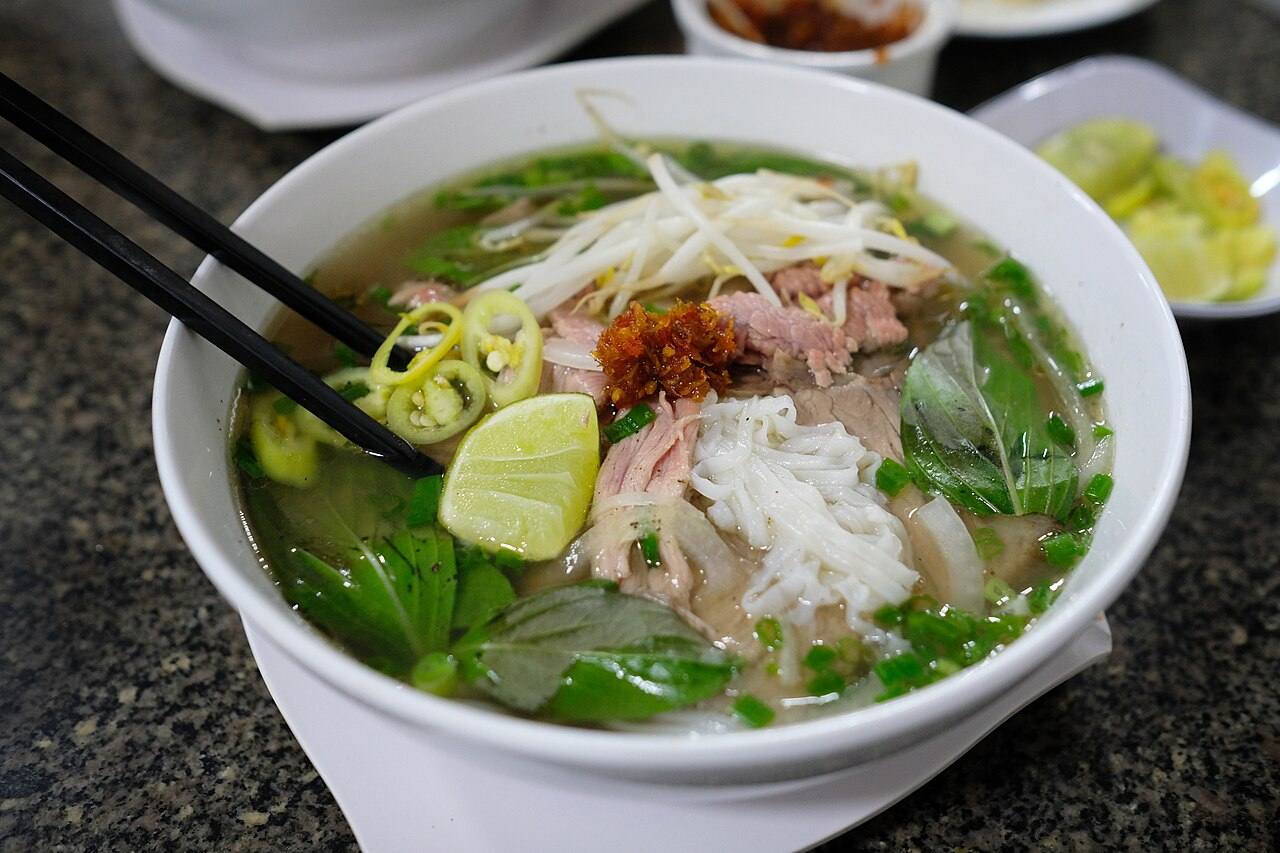
Direct answer: Phở is Vietnam’s national noodle soup: flat rice noodles in a clear, slow-simmered beef or chicken broth, topped with thin slices of meat, scallions, and fresh herbs. The Hanoi version — the original — is delicate and refined: a cleaner broth, minimal garnishes, and a focus on aroma from charred ginger and onion.
What makes the Hanoi version different
Direct answer: Authentic pho Hanoi is defined by restraint. The broth is clear and aromatic, never cloudy or sweet; the garnishes are minimal — scallions, white onion, herbs, lime, and chili — compared with the generous plate of bean sprouts and hoisin common in the south. Most shops serve just phở bò (beef) or phở gà (chicken).
The soul of Hanoi phở is the broth. Good shops simmer beef or chicken bones for many hours until the stock turns clear and deeply savory, perfumed with charred ginger and onion. That aroma — smoky, sweet, faintly spicy — is the first thing you notice when the bowl lands in front of you, and it is the hardest thing for a home cook to reproduce. Flat rice noodles go in first, then paper-thin slices of beef (or shredded chicken), then scallions and herbs. Lime and chili sit on the side for you to adjust.
Order phở bò and you’ll usually choose your cut: rare beef added at the last second, brisket, or a combination. Phở gà, the chicken version, is lighter and especially popular in the morning. Either way, the Hanoi rule holds: the bowl should taste clean. If the broth is muddy or sweet, you’re not eating the real thing.
One Hanoi exception proves the rule. Pho Thin at 13 Lo Duc made its name with a smoky twist — the beef is stir-fried over fierce heat before it ever meets the broth, giving the whole bowl a charred, wok-fired depth you won’t find in a classic clear-broth shop. It is still unmistakably Hanoi phở, just with a louder personality.
How much does it cost in Hanoi
Direct answer: A bowl of phở on the streets of Hanoi costs 35,000–80,000 VND (about $1.35–3.05) in 2026. A classic bowl at a famous spot like Pho Thin or Pho Bat Dan runs about 50,000–70,000 VND. For a dish this good, pho Hanoi remains one of the best-value meals in all of Vietnam.
| Where you eat it | Price (VND) | Approx. USD |
|---|---|---|
| Sidewalk stalls and local shops | 35,000–50,000 | about $1.35–3.05 across the full range |
| Famous names (Pho Thin, Pho Bat Dan) | 50,000–70,000 | |
| Tourist-area restaurants | 60,000–80,000 |
Prices shift a little with location and toppings — extra beef costs more — but you should never need to pay more than 80,000 VND for an excellent bowl. If a menu lists phở at double that, you’re paying for the view, not the broth.
Want to cook it yourself? Several Hanoi cooking classes teach phở, and we’ll point you to the right one for your schedule. Message us on WhatsApp: chat about learning to cook phở in Hanoi or email us.
Pho Hanoi: where to eat the best bowls
Direct answer: For the classic Hanoi bowl, head to Pho Thin at 13 Lo Duc, famous for its smoky stir-fried beef style, or Pho Gia Truyen (Pho Bat Dan) at 49 Bat Dan, where locals queue for the clear beef broth. Both are among the most-mentioned names in every Hanoi phở conversation.
Pho Thin — 13 Lo Duc. The stir-fried beef phở that built a legend. The beef hits a screaming-hot wok with garlic before joining the broth, so every bowl carries a smoky char you won’t get anywhere else. Expect to pay around 50,000–70,000 VND. Go early; the lunch crowd is serious.
Pho Gia Truyen (Pho Bat Dan) — 49 Bat Dan. The purist’s choice: a crystal-clear beef broth, minimal garnish, and long queues of locals that tell you everything about its reputation. This is the bowl to judge all other Hanoi phở against, at roughly 50,000–70,000 VND.
Both shops sit within easy reach of the Old Quarter, so you can fit either into a morning of sightseeing. Our advice: try one classic clear-broth bowl and one Pho Thin smoky bowl on different days, then decide which camp you’re in.
Learn to cook pho in Hanoi
Direct answer: Phở is on the menu at several Hanoi cooking classes — check the day’s menu before booking, since longer broth dishes rotate. Apron Up, Rose Kitchen, and Daisy Cooking Class regularly teach pho Hanoi, and Hidden Hanoi can add phở gà or phở bò to a customizable menu. You’ll learn the broth technique and take the recipe home.
Phở is a bigger project than a stir-fry, so classes that teach it well walk you through the full method: charring the ginger and onion, building the stock, seasoning to balance, and assembling the bowl. These are the schools we recommend:
- Rose Kitchen — market tour plus hands-on cooking at a villa, with phở featured on its Pho/Bun Cha/Banh Xeo menu alongside egg coffee. See Rose Kitchen’s cooking class with local market tour.
- Apron Up Cooking Class — its “5 Traditional Dishes” class includes a Pho/Bun Cha/Spring Roll/Papaya Salad/Egg Coffee menu, with market visit and classes running four times daily. See Apron Up’s 5-dish Hanoi cooking class.
- Daisy Cooking Class — choose 3 dishes from 9, including phở, at this Old Quarter school known for small groups and hands-on teaching. See Daisy Cooking Class at 54 Hang Buom.
- Hidden Hanoi — a garden villa setting with a customizable menu that can include phở gà or phở bò, plus free Old Quarter pickup. See Hidden Hanoi’s customizable cooking class.
Frequently asked questions
Can I learn to cook phở in a Hanoi cooking class?
Yes. Apron Up, Rose Kitchen, and Daisy Cooking Class regularly include phở on their menus, and Hidden Hanoi can add phở gà or phở bò to a customizable menu. Because the broth is a longer dish, confirm it’s on the day’s menu when you book — menus rotate, and you’ll want the full broth-building session, not just assembly. If you specifically want a pho Hanoi cooking class, say so when you book.
What is the difference between phở bò and phở gà?
Phở bò is made with beef — thin slices of rare beef, brisket, or both — in a rich, long-simmered stock, and it’s the Hanoi classic. Phở gà uses chicken for a lighter, cleaner-tasting broth and is especially popular at breakfast. Most famous Hanoi shops specialize in one or the other, so pick your protein before you pick your shop.
How much does a bowl of phở cost in Hanoi in 2026?
Expect 35,000–80,000 VND (about $1.35–3.05). Local sidewalk shops charge 35,000–50,000 VND, famous names like Pho Thin and Pho Bat Dan run 50,000–70,000 VND, and tourist-area restaurants reach up to 80,000 VND. Anything far above that is paying for location, not quality — the best pho Hanoi offers is usually found at the busiest sidewalk shops, not the priciest dining rooms.
Where do locals eat phở in Hanoi?
Locals queue at Pho Gia Truyen (Pho Bat Dan), 49 Bat Dan, for the definitive clear beef broth, and at Pho Thin, 13 Lo Duc, for the smoky stir-fried beef version. Both are neighborhood institutions for pho Hanoi rather than tourist traps — the queues of Vietnamese office workers at lunchtime are the review that matters.
Where can I find an authentic pho Hanoi recipe to try at home?
Start with our tested Hanoi pho recipe — it walks through the clear-broth method we teach in class, with a troubleshooting table for common mistakes. Once you’ve tried the home version, a pho Hanoi cooking class will make much more sense.
How long does it take to learn phở in a cooking class?
A class session runs 3–4 hours, which is enough to learn the complete method: charring aromatics, building and seasoning the stock, preparing noodles and toppings, and assembling the bowl. A restaurant simmers its broth far longer, but you’ll leave understanding the technique — and with the recipe to practice the long version at home.
Ready to learn phở from a Hanoi chef? Tell us your dates and we’ll match you with a class that has phở on the menu. Message the Hanoi Cooking Class Team on WhatsApp or email us.
Related dishes: continue your Hanoi food tour with our Bún Chả — Hanoi Guide and our Chả Cá Lã Vọng — Hanoi Guide.