Vietnam is one of Asia’s most vegetarian-friendly countries thanks to deep Buddhist traditions — and Hanoi’s cooking classes reflect that. This vegetarian cooking classes Hanoi guide compares the genuinely veg-friendly options. But “we can adapt” varies wildly between providers, from dedicated vegetarian curricula to a hastily substituted menu. This guide maps the genuinely good veg and vegan options, what to ask when booking, and how to make sure your class is a feast, not an afterthought.
Direct answer: The best vegetarian cooking classes Hanoi are Apron Up — our top pick for vegetarian cooking classes Hanoi: (dedicated vegetarian classes sold separately), Hidden Hanoi (veg and vegan alternatives on request), Chef Duyen (full vegan menu at her home class), and Hanoi Cooking Centre (a complete vegetarian course type). Always book the vegetarian option in advance — market shopping happens the same morning.
In this guide
- The best vegetarian-friendly classes compared
- Dedicated veg classes vs adapted menus
- What you’ll cook: typical vegetarian menus
- How to book as a vegetarian (what to ask)
- Why Hanoi is great for plant-based travelers
- Watch-outs: fish sauce, eggs, and mixed groups
- Frequently asked questions
Traveling vegetarian or vegan? Message us your dates — we’ll book you into a class with a proper veg menu, not a improvised substitution.
The best vegetarian-friendly classes compared
Direct answer: Apron Up leads the vegetarian cooking classes Hanoi with classes sold as a separate product; Hanoi Cooking Centre offers vegetarian as one of six full course types; Chef Duyen cooks a dedicated vegan menu at her home class; Hidden Hanoi provides veg and vegan alternatives on request. All four are proven options — the difference is whether vegetarian is the curriculum or an adaptation.
| Class | Veg offering | Price | Format |
|---|---|---|---|
| Apron Up | Dedicated vegetarian classes (separate booking) | $32 direct | Old Quarter, 4 daily sessions |
| Hanoi Cooking Centre | Vegetarian course type (full curriculum) | ~$60 | Cooking school, 4 hours |
| Chef Duyen | Full vegan menu option | $45 direct | Private home, small groups |
| Hidden Hanoi | Veg/vegan alternatives on request | $55 | Garden villa, free transfers |
Dedicated veg classes vs adapted menus
Direct answer: A dedicated vegetarian cooking classes Hanoi (Apron Up, Hanoi Cooking Centre’s veg course) teaches dishes designed meat-free from the start — better techniques, better flavors. An adapted menu swaps proteins out of a standard menu, which works fine but rarely shines. If vegetarian food is a priority rather than a constraint, choose the dedicated option.
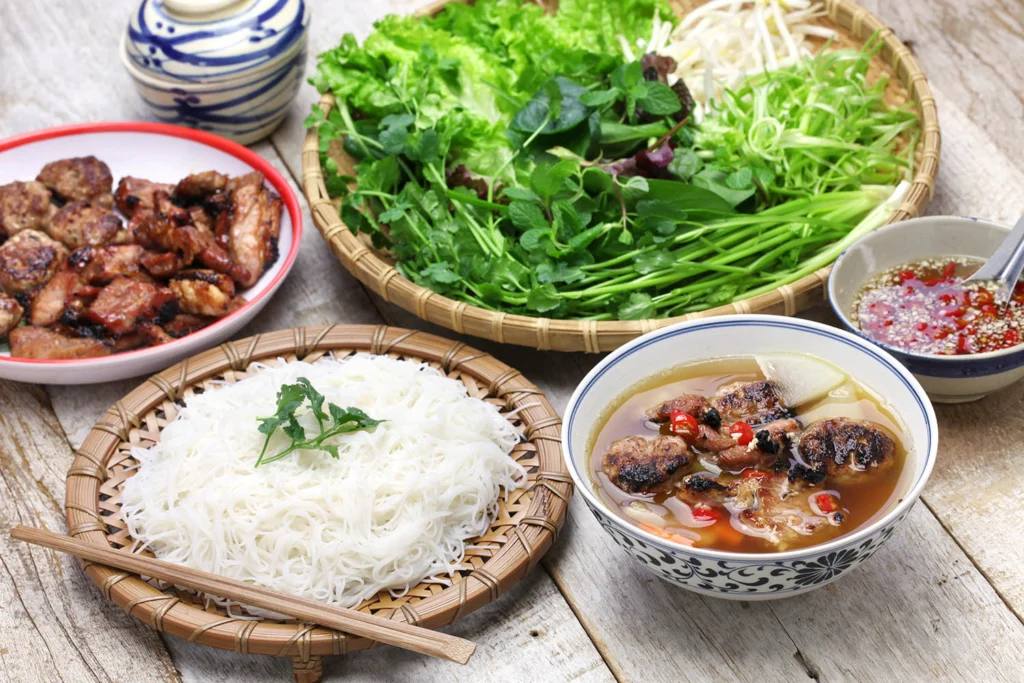
There is no shame in adapted menus — most Hanoi classes handle them well with advance notice, and you will still eat very well. But the gap is real: a tofu-and-mushroom hotpot designed as vegetarian beats a bun cha with the pork removed. When comparing, ask one question: “Is the vegetarian menu a separate curriculum, or substitutions?” The answer tells you everything.
Vegetarian cooking classes Hanoi: what you’ll cook
Direct answer: Vegetarian Hanoi menus typically include fresh or fried spring rolls with tofu and mushroom, papaya or banana flower salad, a tofu/mushroom main (hotpot or claypot), stir-fried morning glory, and egg coffee or che for dessert. Buddhist vegetarian (chay) cuisine gives instructors a deep repertoire — this is not a compromise menu.
- Spring rolls (nem chay): tofu, wood-ear mushroom, glass noodles — a Hanoi staple that happens to be vegetarian-friendly
- Papaya or banana flower salad: crunchy, herbal, naturally plant-based
- Claypot tofu/mushroom: caramelized, savory, deeply satisfying
- Morning glory (rau muong): stir-fried with garlic — Vietnam’s beloved green
- Egg coffee or che: check vegan status — egg coffee contains egg yolk; che varieties are usually vegan [CẦN XÁC MINH per class]
How to book as a vegetarian (what to ask)
Direct answer: To book vegetarian cooking classes Hanoi, book the vegetarian option explicitly — select it on the booking page or write “vegetarian menu, [number] guests” in your WhatsApp message. Confirm three things: that the market shopping will include your ingredients, whether egg coffee can be made vegan or substituted, and whether the whole group or just your station is vegetarian.
- Book early in your message. “Hi, I’d like the vegetarian class on [date] for 2 people” — not a footnote after booking.
- Specify vegan if needed. Vegetarian (chay) in Vietnam sometimes includes eggs; vegans should say “thuần chay / vegan, no eggs, no dairy.”
- Ask about the group. In mixed groups, your station cooks veg while others cook meat — totally normal, but good to know.
- Flag allergies separately. Peanuts and shellfish are garnish staples; nut and shellfish allergies need explicit, repeated flagging.
💡 Guide tip: the words that unlock everything are “ăn chay” (vegetarian) and “thuần chay” (vegan). Instructors hear them daily — you are not being difficult, you are speaking their language.
One more practical note: put your dietary requirement in the first message, not as an afterthought once dates are set. Providers plan market shopping around confirmed menus, and a vegetarian request that arrives the night before can mean a thinner ingredient selection. Early notice gets you the full spread — the colorful, generous version of the menu, not the fallback one.
Why Hanoi is great for plant-based travelers
Direct answer: Hanoi’s Buddhist vegetarian (chay) tradition means vegetarian cooking classes Hanoi are mainstream, not niche — dedicated chay restaurants are everywhere, especially around temples, and instructors genuinely know vegetarian technique. The cuisine’s herb-and-vegetable backbone means veg versions of classic dishes taste intentional, not deprived.
This matters for your class: you are learning from cooks who grew up with vegetarian food, not chefs improvising around a meat menu. Dishes like banana flower salad and tofu claypot are things Hanoians actually eat, not tourist inventions. Your new skills transfer directly to home cooking.
Watch-outs: fish sauce, eggs, and mixed groups
Direct answer: At vegetarian cooking classes Hanoi, note that fish sauce (nuoc mam) seasons nearly everything in Vietnamese cooking, eggs appear in egg coffee and some dishes, and in mixed groups your neighbors will be cooking meat beside you. None of these are problems with advance notice — but surprise announcements at the market do not work, because shopping happens that morning.
- Fish sauce: the default seasoning; vegetarian versions use soy-based alternatives — must be requested.
- Egg coffee: contains whipped egg yolk; ask about a vegan substitute or a che dessert instead.
- Mixed groups: normal and fine — your station is separate, and instructors manage both menus simultaneously.
- “Vegetarian” ambiguity: confirm whether eggs/dairy are included if you are strictly vegan.
Beyond the class: Hanoi’s chay (vegetarian) scene
Direct answer: Hanoi’s Buddhist vegetarian (chay) restaurants — and vegetarian cooking classes Hanoi — make the city one of Asia’s best for plant-based travelers beyond the cooking class. Dedicated chay eateries cluster around temples and the Old Quarter, serving mock-meat feasts and vegetable hotpots at local prices. Time a visit for the 1st or 15th of the lunar month, when many locals eat vegetarian and the selection peaks.
After your class, put your skills to the test: order confidently at a chay buffet, recognize the tofu and mushroom preparations you learned, and taste how professionals handle the same ingredients. Dishes to hunt down: nem chay (vegetarian spring rolls), mushroom hotpot (lau nam), and caramelized claypot tofu. Prices at local chay spots are typically 30,000–80,000 VND per dish — some of the cheapest excellent food in Hanoi.
The lunar-calendar rhythm is worth knowing: on mùng 1 (1st) and rằm (15th), vegetarian eating surges across the city, chay restaurants are at their busiest and best, and even omnivore friends will happily join. If your trip overlaps these days, plan a chay food crawl — your cooking class will have taught you exactly what you’re eating.
Frequently asked questions
Which Hanoi cooking class is best for vegetarians?
Apron Up (dedicated vegetarian classes, $32) and Hanoi Cooking Centre (full vegetarian course type, ~$60) offer purpose-built veg curricula. Chef Duyen’s vegan home menu ($45) is the most intimate option. Hidden Hanoi adapts well on request ($55).
Can vegans do a Hanoi cooking class?
Yes. Chef Duyen offers a full vegan menu, and Hidden Hanoi provides vegan alternatives. Book explicitly as vegan (“thuần chay”) — standard vegetarian in Vietnam can include eggs. Confirm the dessert too, since egg coffee contains egg yolk.
Do I pay extra for a vegetarian menu?
Generally no — vegetarian menus cost the same as standard at the classes above. Apron Up’s veg classes are separate products at the same $32 price point.
Is Vietnamese food naturally vegetarian-friendly?
Very. Buddhist chay tradition makes vegetarian cooking mainstream in Hanoi, and the cuisine’s vegetable-and-herb foundation adapts beautifully. You will learn dishes locals actually eat, not compromises.
What if only one person in my group is vegetarian?
Book normally and note “1 vegetarian” when booking. Instructors run mixed stations routinely — the vegetarian guest cooks the veg menu while others cook standard. Everyone eats together at the end.
Related classes
- Apron Up Cooking Class — dedicated vegetarian classes, $32 direct
- Chef Duyen — full vegan home menu, $45 direct
- Hidden Hanoi — veg/vegan alternatives, garden villa, $55
Related dishes
- Nem ran (spring rolls) — the vegetarian version is a Hanoi staple
- Che — naturally vegan Vietnamese dessert soups
Eat plant-based? Message us your dates and dietary needs — we’ll secure a proper vegetarian or vegan menu, confirmed with the provider before you pay anything.